




Leave A Message
We will contact you as soon as possible!






Home > News > Company News

 2026-09-24
2025-10-24
2025-09-26
2024-12-23

 2026.09.24
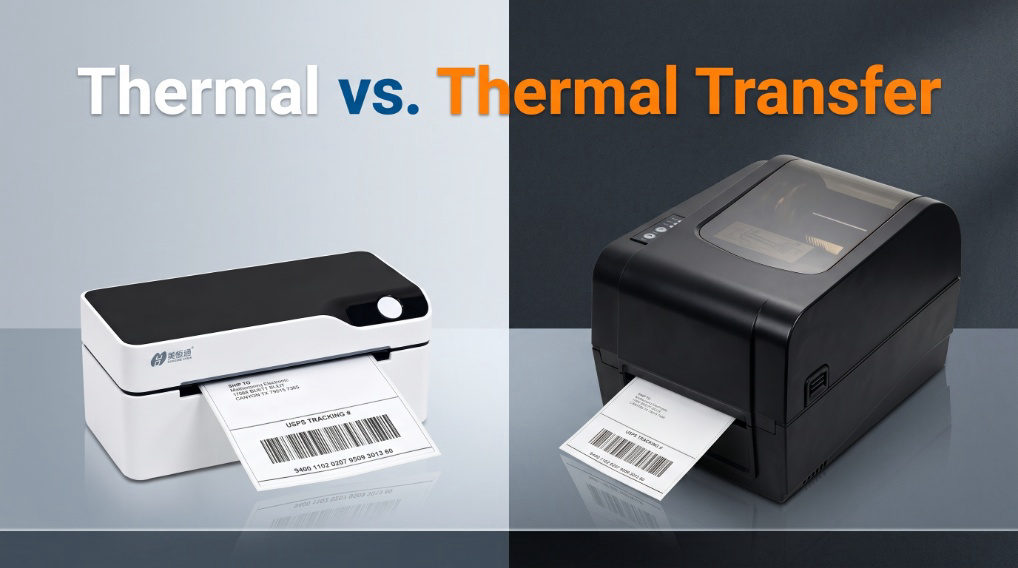
For supply chain managers and IT procurement teams, selecting the right commercial printing hardware requires an immediate decision: Direct Thermal or Thermal Transfer? This choice dictates not only your initial hardware budget but also your long-term consumable costs and frontline operational efficiency.
Understanding the mechanical differences between these two methods is the first step in optimizing your Total Cost of Ownership (TCO).
Direct Thermal Technology:
The printhead applies heat directly to chemically treated heat-sensitive paper, which darkens upon contact.
Core Advantage: Eliminates the need for ribbons or ink, significantly reducing ongoing consumable expenses and simplifying inventory.
Maintenance Value: With fewer internal moving parts, the hardware experiences a lower failure rate, drastically reducing maintenance downtime for frontline staff.
Thermal Transfer Technology:
Uses a heated printhead to melt a wax or resin-based ribbon, transferring the ink directly onto the label surface.
Core Advantage: Produces highly durable text and barcodes that withstand UV exposure, chemical spills, and heavy scratching.
Maintenance Note: Requires regular ribbon replacement, which increases the cost per printed label and necessitates routine intervention by staff.
Hardware selection must strictly align with your frontline environment.
If your operations demand rapid, high-frequency printing where labels only need to survive for a few weeks to months, direct thermal is the absolute efficiency champion.
Logistics & Warehousing: Ideal for high-speed shipping labels and cross-docking tags without stopping the line to replace ribbons.
Retail & Hospitality: The standard technology for your POS printer and receipt printer fleet, perfectly handling rapid front-desk checkouts and kitchen order routing.
Healthcare & Ticketing: Used extensively for patient wristbands, queue management slips, and visitor passes.
When a label must remain legible for years or survive harsh industrial conditions, thermal transfer is mandatory.
Industrial Manufacturing: Automotive parts tracking and hazardous chemical identification.
Fixed Asset Management: Corporate IT equipment tags and permanent warehouse rack labels facing constant physical wear.

Wants To Get Latest Updates! Sign Up For Free


 WhatsApp
